Skip to content

Peeling, cracking, or bubbling paint can make a commercial building look neglected, but appearance is only part of the problem. When a coating begins to fail, there is usually a reason behind it.
Moisture may have reached the surface. The previous coating may not have adhered properly. The surface may not have been adequately prepared. In other cases, the coating simply may not have been appropriate for the surface or conditions.
Whatever the cause, applying another coat of paint without addressing the underlying issue can lead to the same problem again.
At Profeta Painting, we look beyond the visible damage. Understanding why commercial paint failed helps determine the right preparation, products, and painting process to create a more durable result.
Why Does Commercial Paint Peel?
Peeling happens when paint loses adhesion to the surface underneath it or to a previous coating.
Sometimes, the problem starts with the surface itself. Dirt, grease, dust, loose paint, rust, or other contaminants can interfere with adhesion. Painting over a glossy surface without properly preparing it can create problems as well.
Moisture can also cause paint to separate from the substrate.
Sherwin-Williams identifies moisture, painting over dirty or wet surfaces, and applying paint over an existing coating with poor adhesion among the potential causes of peeling. Its guidance recommends identifying and correcting the source of water before repainting when moisture contributes to the failure.
For facility managers, peeling paint should be a signal to investigate rather than simply schedule a quick touch-up.
Moisture Can Cause Commercial Paint to Peel or Bubble
Water and paint do not always mix well, particularly when moisture becomes trapped beneath a coating.
A roof leak, plumbing problem, condensation, exterior water intrusion, or persistent humidity can introduce moisture behind a painted surface. As that moisture moves through the material, it can interfere with adhesion and push the coating away from the surface.
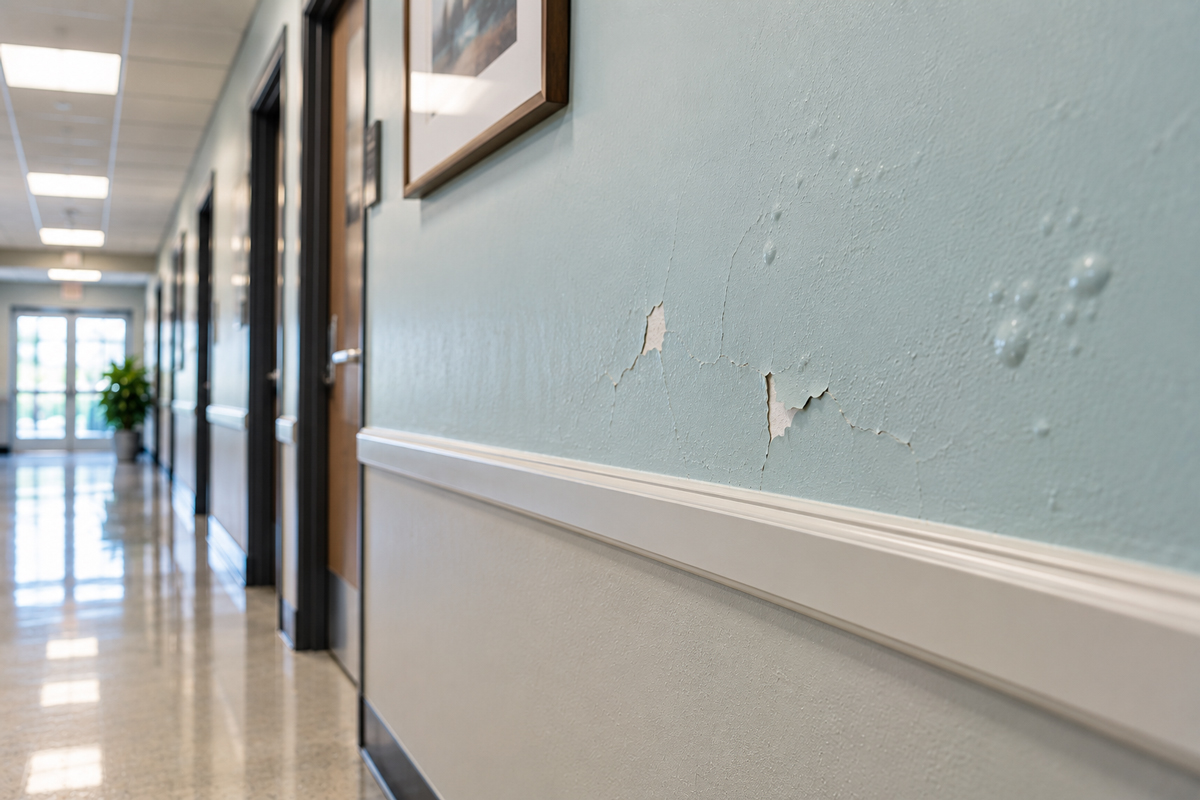
The result may appear as peeling paint or raised bubbles and blisters.
Sherwin-Williams defines blistering as bubbles caused by a loss of adhesion that lifts the paint film away from the underlying surface. Heat, moisture, painting over damp surfaces, and inadequate surface preparation can all contribute.
That is why finding the moisture source matters.
If a wall continues to get wet, repainting it may temporarily improve its appearance, but it will not correct the underlying building issue. Repair the source of the moisture first. Then, allow the surface to dry and prepare it properly before repainting.
Poor Surface Preparation Can Lead to Early Paint Failure
A quality commercial paint job starts well before anyone opens a can of paint.
Surfaces may need cleaning, scraping, sanding, patching, rust removal, priming, or other preparation depending on their condition and material. Skipping those steps can prevent the new coating from bonding correctly.
For example, imagine painting directly over a wall with loose existing paint. The new coating may adhere to the old paint, but if the old layer is already separating from the wall, both layers can eventually come off together.
The same principle applies to dirt, grease, dust, and other contaminants.
This is one reason professional surface preparation plays such an important role in coating performance. Profeta Painting discusses this process further in Surface Preparation for a Long-Lasting Paint Job.
The Wrong Paint or Coating Can Create Problems
Commercial environments place very different demands on painted surfaces.
A coating that works well in a standard office may not be appropriate for a warehouse, commercial kitchen, parking structure, or industrial facility. Some areas face frequent cleaning, moisture, chemicals, abrasion, temperature changes, or heavy traffic.
The substrate matters too. Drywall, concrete, masonry, wood, and metal each require different considerations.
As a result, choosing a commercial paint or coating should involve more than selecting a color and sheen. The product needs to match the surface, environment, and expected use.
Profeta Painting’s What Makes Commercial Painting Different from Residential Painting? explains why materials, preparation, scheduling, and project requirements differ in commercial environments.
Why Does Commercial Paint Crack?
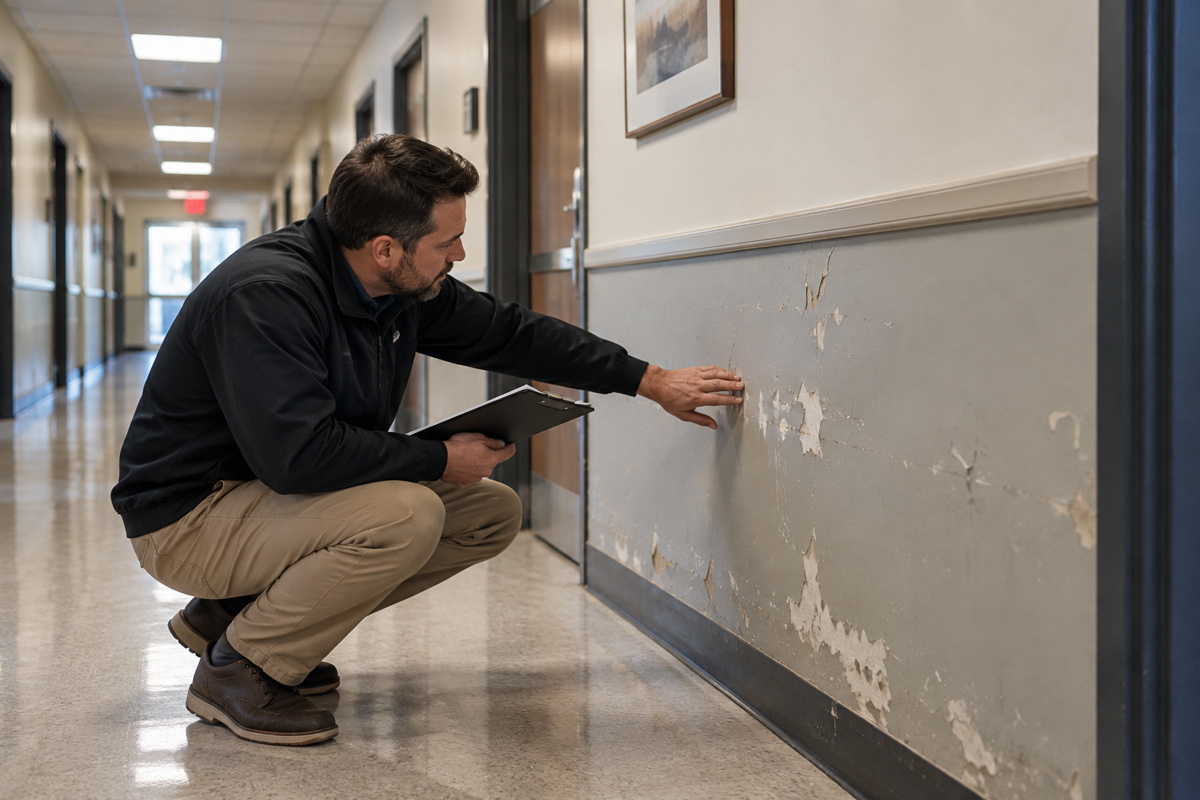
Cracking usually appears as lines or splits in the paint film. It may start with small hairline cracks before progressing into larger cracks and eventually flaking.
Several factors can contribute.
Inadequate surface preparation, over-thinning or over-spreading paint, using coatings with insufficient adhesion or flexibility, and the natural hardening of paint as it ages can lead to cracking. As older coatings become more brittle, they may lose some ability to accommodate changes in temperature and humidity.
Cracking can also indicate that multiple layers of old paint have reached the end of their useful life.
Rather than covering those cracks with another coat, contractors should remove loose material and evaluate the condition of the remaining coating before moving forward.
What Causes Paint to Bubble or Blister?
Bubbling paint is especially noticeable because the coating physically lifts away from the surface.
Moisture is a common culprit, but it is not the only possibility. Excessive heat, painting a damp surface, high humidity during or shortly after application, contamination, and inadequate preparation can also contribute to blistering.
The location of the bubbling can provide useful clues.
For example, recurring bubbles near an exterior wall, window, ceiling, or other potential water source may warrant a closer look for moisture. Widespread blistering shortly after a painting project could point toward application or preparation issues.
Either way, the goal should be to determine why the coating lost adhesion before repainting the area.
Normal Wear vs. Premature Commercial Paint Failure
Not every scuff, scratch, or faded area indicates a coating failure.
Commercial buildings experience normal wear. Busy hallways get scuffed. Doors and trim take repeated contact. Exterior surfaces gradually weather. High-traffic areas generally need attention more often than spaces that see little activity.
Peeling, widespread cracking, and bubbling are different.
Those conditions suggest that the coating itself has lost adhesion or integrity. If the damage appears relatively soon after painting or repeatedly returns in the same area, investigating the cause becomes even more important.
For additional guidance on recognizing when paint needs attention, see When Should You Repaint a Commercial Building? Signs Facility Managers Should Watch For.
Why You Should Identify the Problem Before Repainting
When commercial paint begins to fail, repainting is only one part of the solution.
First, determine what caused the problem. If moisture is entering the wall, address the source. If the previous coating has poor adhesion, remove unstable material. If the surface contains grease, dust, rust, or other contaminants, prepare it appropriately. Finally, select a coating designed for the surface and environment.
This process may take more work upfront, but it helps prevent facility managers from paying to repaint the same problem repeatedly.
It also reinforces why choosing an experienced commercial painting contractor matters. Profeta Painting’s Mistakes to Avoid When Choosing a Commercial Painter covers additional factors facility managers and property owners should consider before hiring a contractor.
Maintenance Painting Can Catch Problems Before They Spread
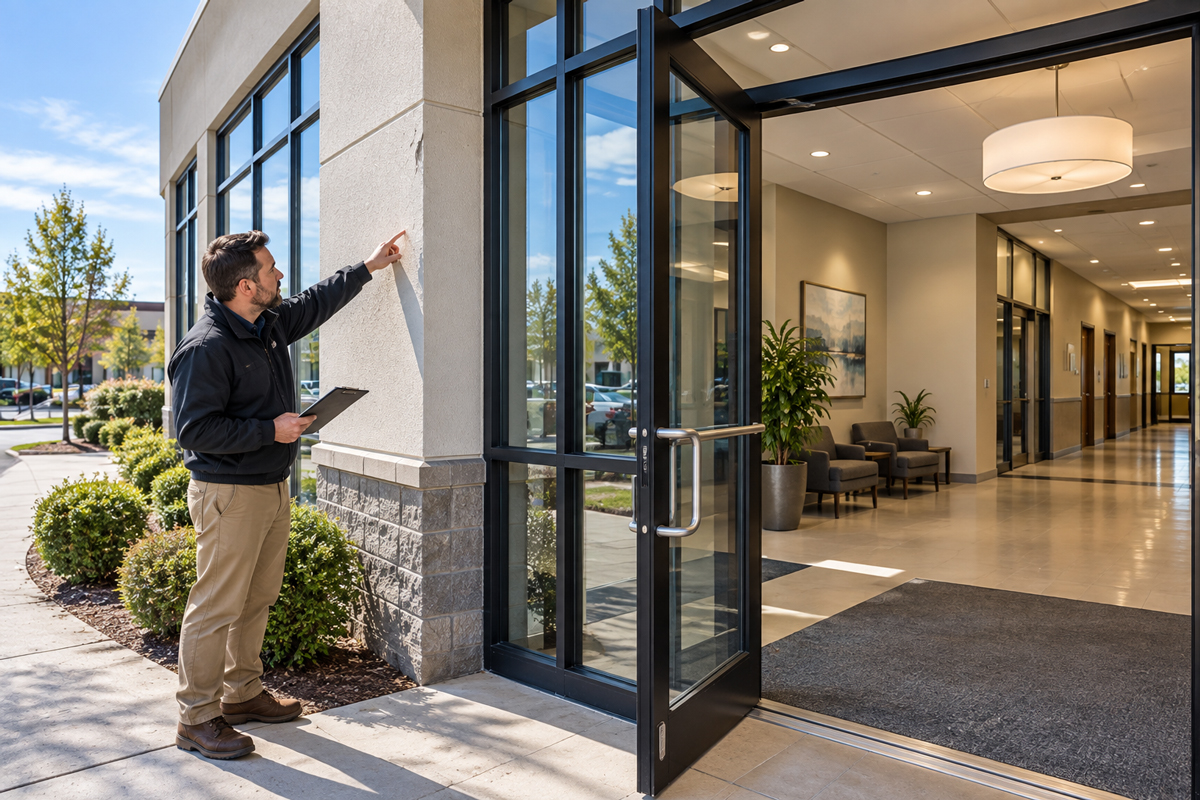
Regular inspections make paint problems easier to address.
Instead of waiting until peeling or cracking spreads across an entire wall or building, facility managers can identify small areas of deterioration and investigate them early. This approach works particularly well as part of a maintenance painting program.
Profeta Painting also refers to this ongoing approach as service painting. Through planned maintenance, facilities can prioritize areas based on condition, traffic, exposure, and budget rather than waiting for widespread deterioration.
You can learn more in Maintaining Your Commercial Paint Job Year After Year.
Fix the Cause, Not Just the Paint
Peeling, cracking, and bubbling paint are symptoms. The most important question is what caused them.
Moisture, inadequate surface preparation, aging coatings, improper product selection, application conditions, and everyday exposure can all contribute to commercial paint failure. Identifying the cause gives you a much better chance of achieving a lasting repair.
For facility managers, that means looking beyond the damaged paint and considering the surface, environment, and history of the coating system.
If paint is peeling, cracking, or bubbling in your Rochester-area commercial facility, contact Profeta Painting to evaluate the affected surfaces and determine the right approach before repainting.