
Two Smart Flooring Solutions for Commercial Spaces: concrete polishing vs. epoxy
When it comes to upgrading your commercial floors, two options often come up: polished concrete and epoxy coating. At Profeta Painting, we install both. Each offers durability, style, and performance, but in different ways.
So how do you choose? That’s the question many Rochester business owners and facility managers ask. The answer depends on your space, your needs, and your long-term goals. In this post, we’ll break down the pros and cons of concrete polishing vs. epoxy coating, so you can make the best decision for your building.
Installation and Surface Characteristics
Let’s start with what these flooring systems actually are.
Polished concrete uses your existing concrete slab. We grind, hone, and polish it to a smooth, glossy finish. There’s no coating added, just a transformation of the concrete itself. The result is a durable, stone-like surface with a natural grey tone (unless dyes are added).
Epoxy coating, on the other hand, is a high-strength resin applied over the concrete. It creates a brand-new surface that seals and protects the floor. Epoxy completely changes the look, offering endless color, texture, and finish options.
So, the key difference? Polished concrete enhances the slab you already have. Epoxy coating adds a protective, customizable layer on top.
Durability and Strength
Both options are tough. But their strengths serve slightly different purposes.
Polished concrete is exceptionally hard. It resists abrasion, holds up under high foot traffic, and can even handle vehicle traffic. This is perfect for showrooms or airport terminals. However, it’s not ideal for environments with frequent chemical spills.
Epoxy coatings are built for impact. Their resin-based surface absorbs shock from forklifts, machinery, and dropped tools. They’re also highly chemical-resistant, making them a top choice for manufacturing plants, auto shops, or commercial kitchens.
When comparing concrete polishing vs. epoxy coating, remember:
Polished concrete = better for wear and tear
Epoxy coating = better for impact and chemical resistance
Maintenance Needs
Both floors are relatively low maintenance, but one has the edge.
Polished concrete needs minimal upkeep. Dust mop regularly, wet mop occasionally, and enjoy the shine. It doesn’t require waxing or refinishing. And if it gets scratched, a quick re-polish usually solves the problem.
Epoxy is also easy to clean. Just sweep and mop. However, in high-traffic areas, it may need a new topcoat every few years to restore its luster and protection. If it gets gouged or chipped, patching may be required.
So, concrete polishing vs. epoxy coating in terms of maintenance? Polished concrete wins for having fewer long-term care needs.
Appearance and Customization: Concrete Polishing vs. Epoxy
Here’s where the two flooring systems really part ways.
Polished concrete has a sleek, modern look. It’s industrial-chic with a glossy, light-reflective finish. While dyes and stains can be added for subtle color, it generally maintains a neutral stone appearance.
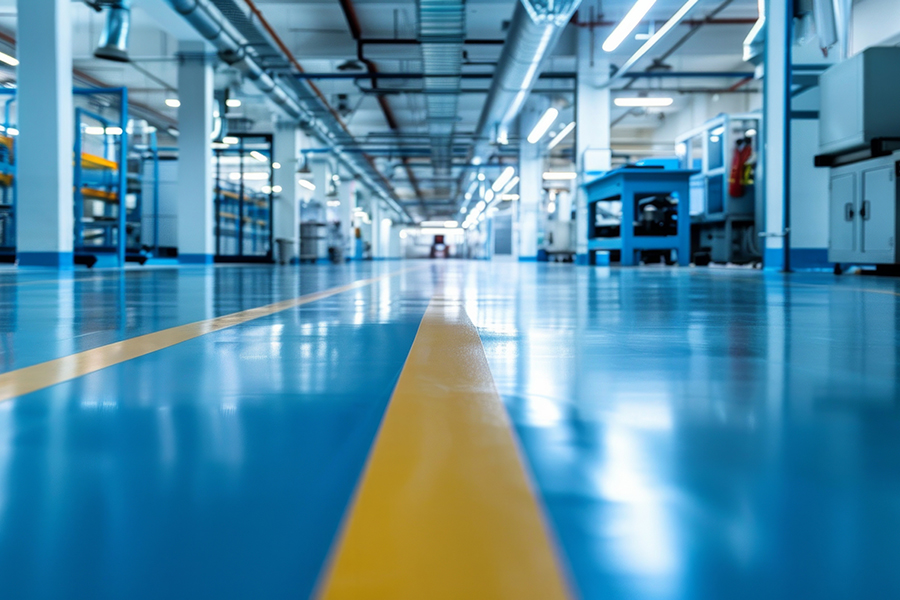
Epoxy floors are all about customization. Choose from vibrant colors, bold patterns, metallic effects, or embedded logos. You can even incorporate safety striping or zone markings directly into the design.
So if you want a specific brand color, creative flair, or functional visuals on your floor, epoxy coating is the clear winner.
But if you’re going for simplicity, elegance, and a minimalist look, polished concrete delivers.
Slip Resistance and Safety
Safety is non-negotiable. Let’s talk traction.
Polished concrete, while beautiful, can get slippery, especially when wet. To combat this, we offer treatments like sealers or texture additives to boost traction. These work well in most dry indoor environments.
Epoxy floors, by contrast, are often built with safety in mind. Installers can add grit to the topcoat for serious slip resistance. That’s why epoxy is a common choice for kitchens, garages, and wet workspaces.
When comparing concrete polishing vs. epoxy coating for safety, epoxy gets the nod, especially in environments where water or oil may hit the floor.
Cost and Installation Time
Let’s talk numbers.
Polished concrete generally has a lower initial cost per square foot. Since it uses your existing concrete, you save on materials. However, the grinding and polishing process is labor-intensive and requires special equipment.
Epoxy coating has a higher upfront cost. Materials and labor add up, especially if you’re using multiple layers or custom colors. The floor also needs time to cure, usually 24 to 48 hours before full use.
However, epoxy can offer long-term savings in harsh environments. Its added protection may reduce the need for frequent repairs or floor replacements down the road.
So which is faster to install? Epoxy typically installs quicker per square foot, but requires downtime for curing. Polished concrete can be used as soon as it’s finished.
Best Applications for Each
Not sure which floor suits your space? Here’s our guidance:
Choose polished concrete if:
You manage a retail store, office lobby, or showroom
You want a clean, low-maintenance look
Your floors don’t face chemical exposure
Budget is a key factor
Choose epoxy coating if:
You run a warehouse, kitchen, factory, or garage
Your floors face constant wear, spills, or heavy machinery
You need specific color zones, safety markings, or logos
You want full creative control over the design
At Profeta Painting, we help Rochester businesses choose flooring that meets both their operational needs and aesthetic goals.
Conclusion: What’s the Right Floor for You?
There’s no one-size-fits-all answer in the concrete polishing vs. epoxy coating debate. It all depends on your facility’s unique needs.
Do you need toughness, color, and safety features? Go with epoxy. Want a sleek, affordable, and low-maintenance finish? Choose polished concrete.
Still unsure? We’re here to help. Profeta Painting installs both flooring systems and offers expert guidance tailored to your business. From warehouses to offices, we’ve seen it all—and we’ll help you make the best choice for your space.
Contact us today to schedule a flooring consultation. Let’s bring beauty and durability together—one square foot at a time.